

PODCAST: Embracing Regionalism with Columbus, Ohio Mayor Andrew Ginther and Fellow Matt Chase of the National Association of Counties Season 2 · Ep 49
0:00
1880
PODCAST: Embracing Regionalism with Columbus, Ohio Mayor Andrew Ginther and Fellow Matt Chase of the National Association of Counties Season 2 · Ep 49
News
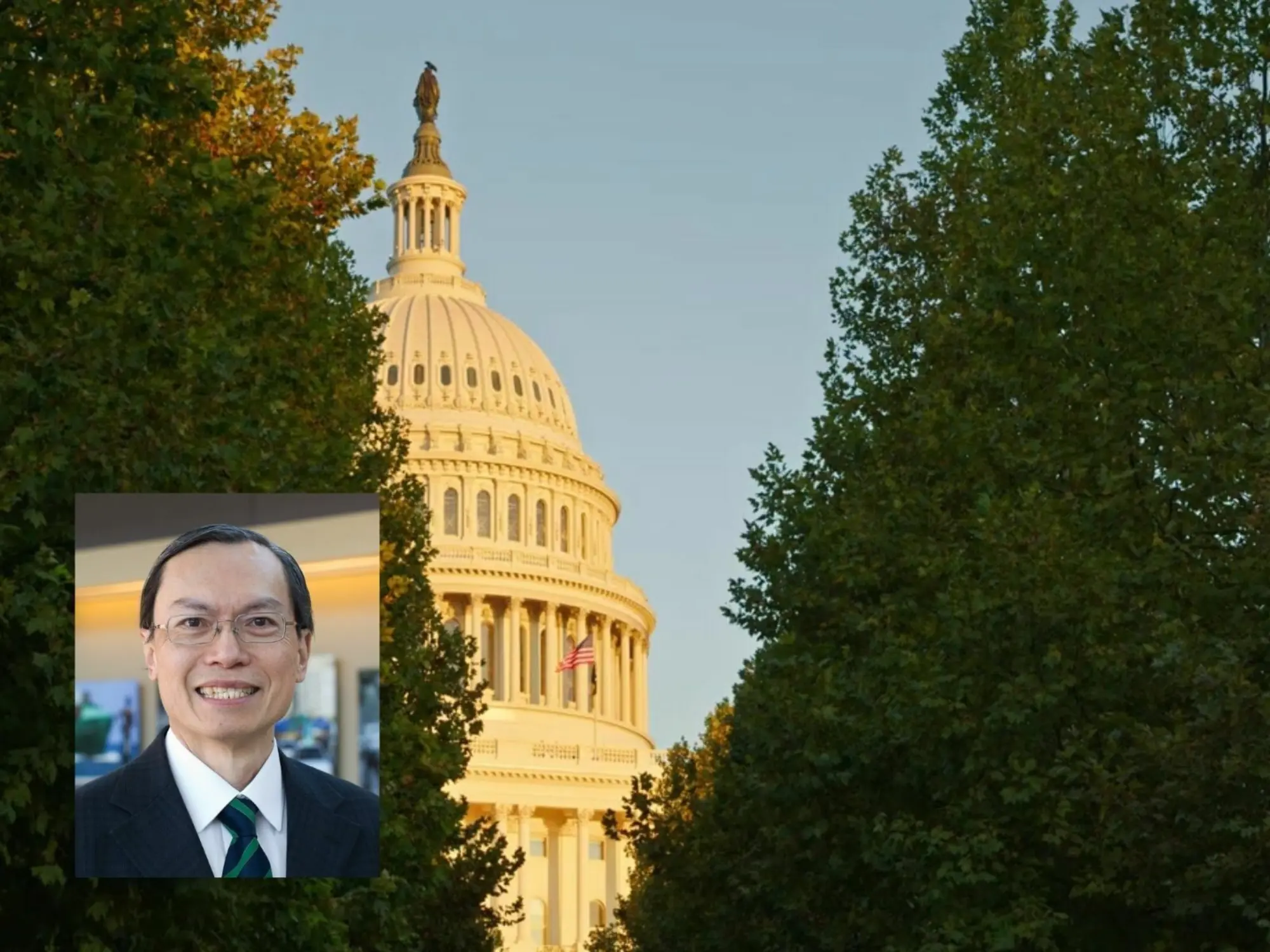
Despite the Executive Branch focus of many public administration scholars and practitioners, the U.S. Constitution provides each branch of government with a critical role in public administration. Congress is Article I, and for good reason. It’s literally the first branch of government, with significant power to shape our administrative institutions through legislation, appropriations, and oversight. Article II defines the executive power vested in the office of the Presidency and allows the Executive Branch, within the bounds of statutes passed by Congress, to establish management priorities and direct policy implementation.
Congress has stood down its Article I role since the beginning of President Trump’s second term, but now we're starting to see signs that it’s taking some of its power back. A system built on separate branches of government can only function to its fullest potential if each branch fulfills its enumerated powers.
In granting distinct powers to separate branches, the Constitution places limits on the power of each branch of government. The boundaries between Congress and the President, however, have become blurred by waves of unilateral executive actions. While presidential use of executive orders is prevalent in American history, President Trump in his second term has taken this to new levels to override legislative prerogatives. These actions have shaken the separation-of-powers system to its core.
A partisan lens has always been brought to bear on these issues. When one party controls both Congress and the Presidency, legislators tend to see themselves as a cohesive partisan team advancing an ideological agenda, not a separate but equal branch with independent responsibilities. This longstanding dynamic, Trump’s outsized charisma, and his key advisors’ deep institutional knowledge on how things get done in the complex federal bureaucracy have been effective in yielding strong Republican support on major policy matters. Equally important is the extensive use of executive orders to advance the President’s priorities in government spending reductions, tariffs, college admission, research, and immigration policy, among others. Since his second inauguration, President Trump has issued over 200 executive orders across domestic and foreign policy areas, including those overriding prior Congressional decisions, such as dismantling the U.S. Department of Education, impounding approved appropriations, and creating new exemptions to career civil service protections. Not since the administration of Franklin D. Roosevelt has the president exerted so much influence in shaping the landscape of America’s administrative institutions and established policies.
Recently, however, Congress is showing signs of waking up:
Moving forward, I hope that individual Members—and Congress as an institution—will continue to exercise their Article I responsibilities while compromising across partisan and ideological lines. It’s a good thing when Congress steps up to its constitutionally assigned role, and we should encourage that now and into the future, regardless of the party or ideology of the Administration in power.
Author – Kenneth K. Wong is a Fellow of the National Academy of Public Administration and the Kerry Group Professor in Public Policy at the University of Hong Kong. He also serves as the Walter and Leonore Annenberg Professor Emeritus of Education Policy at Brown University.
Author
Article Details
Keep Reading
We use cookies to improve your experience on our site. By continuing to use this site, you accept our use of cookies. Privacy Policy