

PODCAST: Announcing A New Partnership for Management Matters with James-Christian Blockwood Season 2 · Ep 50
0:00
453
PODCAST: Announcing A New Partnership for Management Matters with James-Christian Blockwood Season 2 · Ep 50
Hub News
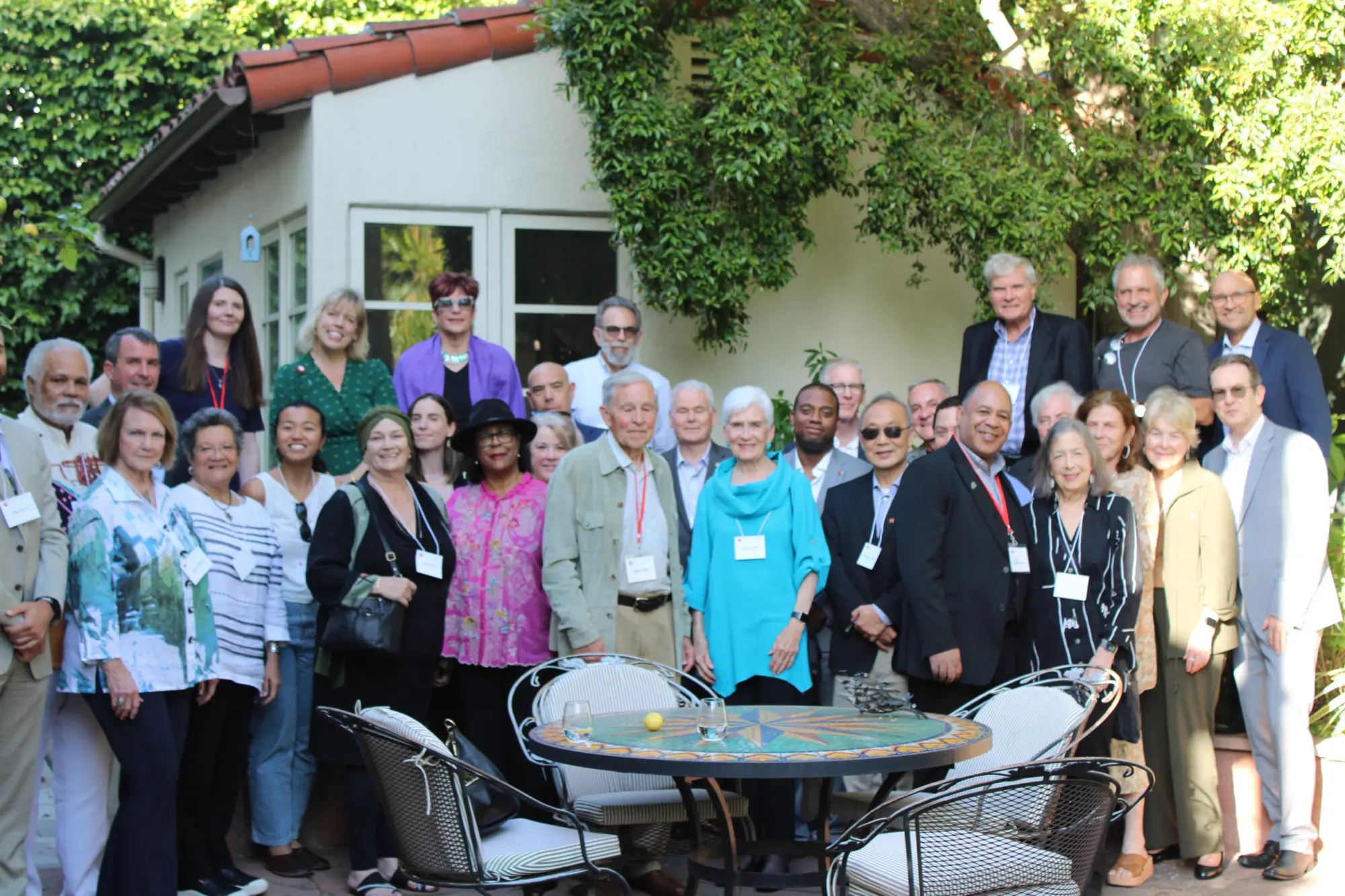
As we close out 2025, the Extreme Weather Resilience Hub reflects on a year of progress, purpose, and partnership. From our successful launch of the Hub in Los Angeles in May to building partnerships across government, academia, nonprofits, and the private sectors, we continue to explore how public administration can evolve to meet 21st-century challenges and design institutions that are proactive, adaptive, and grounded in the needs of people and places. Public administration must evolve, moving beyond outdated bureaucratic models and siloed agencies to create dynamic, place-based institutions that move from planning to action.
This work matters now more than ever; each milestone brings us closer to creating practical solutions that enable local communities to work effectively to navigate the growing risks of extreme weather events.
Thank you to our Fellows, partners, and supporters who have joined us on this journey! Together, we’re moving from planning to action to build a safer, more resilient future.
Advancing Thought Leadership through Convenings
Our convenings in 2025 became catalysts for action, bringing together voices from government, academia, nonprofits, and the private sector to drive forward-thinking solutions and establish the Hub as a center for thought leadership in climate resilience.
We launched the Hub in Los Angeles months after the devastating Southern California wildfires caused widespread destruction—57,000 acres of land burned, more than 18,000 homes and businesses destroyed—to demonstrate the Academy’s commitment to building stronger, more resilient communities by transforming institutions and enabling local governments to implement and finance measures that better protect against extreme weather events.
In September, we examined the importance of implementing place-based solutions to support climate adaptation and resilience, particularly in the face of the shifting federal role. As the federal role is fundamentally changing, now is an opportunity to reimagine the system as a whole, shifting from one that responds to and recovers from disasters to one that focuses on building systems and communities that can thrive in the face of adversity.
In October, we partnered with Leadership Connect to explore the challenges the insurance industry faces due to extreme weather, as homeowners experience rising premiums, and insurer withdrawals have left millions, especially lower-income households, without coverage. Implementing adaptation and resilience projects can mitigate future risk, but state and local governments are challenged by the lack of funding sources. There is a need to rethink the system and explore how insurance, when designed to anticipate rather than react, can help de-risk investments in infrastructure and community resilience.
Partnering with Monash University’s Green Lab, our Fellows from the Climate Adaptation Working Group collaborated to explore a wide range of adaptation and resilience challenges and solutions through an international and comparative lens. Through six roundtables this year, they explored managing risk and institutional design, solutions for financing adaptation, and place-based solutions related to adaptation, including flood risk, stormwater systems, and wildfires.
Building Community and Partnerships
Building community and forging partnerships are essential to transforming resilience from an aspiration into action—empowering local leaders, leveraging diverse expertise, and creating solutions that truly meet the needs of people and places.
We established new partnerships with Future Proofing America Collaborative, Lincoln Institute of Land Policy, and the Environmental Policy Innovation Center to help operationalize the Hub and catalyze action.
We met with over 50 experts and organizations to learn about lessons learned, ongoing efforts to adapt, and explore opportunities to work together on solutions.
We went out to meet with and learn from practitioners at conferences and working sessions, including the National Forum of Black Public Administrators conference in Alexandria, VA, spending time at Climate Week with the University of Miami’s Climate Resilience Institute and the Federation of American Scientists, the Lincoln Institute of Land Policy’s On Common Ground event exploring the intersection of affordable housing and adaptation policy, the Prince George’s County Braveboy Climate Leadership Summit, and the University of Maryland’s Climate Resilient Network bringing scientists into communities.
As we bring an eventful and productive year to a close, we’re excited to give you a taste of what’s in store for 2026.
Article Details
Keep Reading
We use cookies to improve your experience on our site. By continuing to use this site, you accept our use of cookies. Privacy Policy