

PODCAST: Embracing Regionalism with Columbus, Ohio Mayor Andrew Ginther and Fellow Matt Chase of the National Association of Counties Season 2 · Ep 49
0:00
1880
PODCAST: Embracing Regionalism with Columbus, Ohio Mayor Andrew Ginther and Fellow Matt Chase of the National Association of Counties Season 2 · Ep 49
News
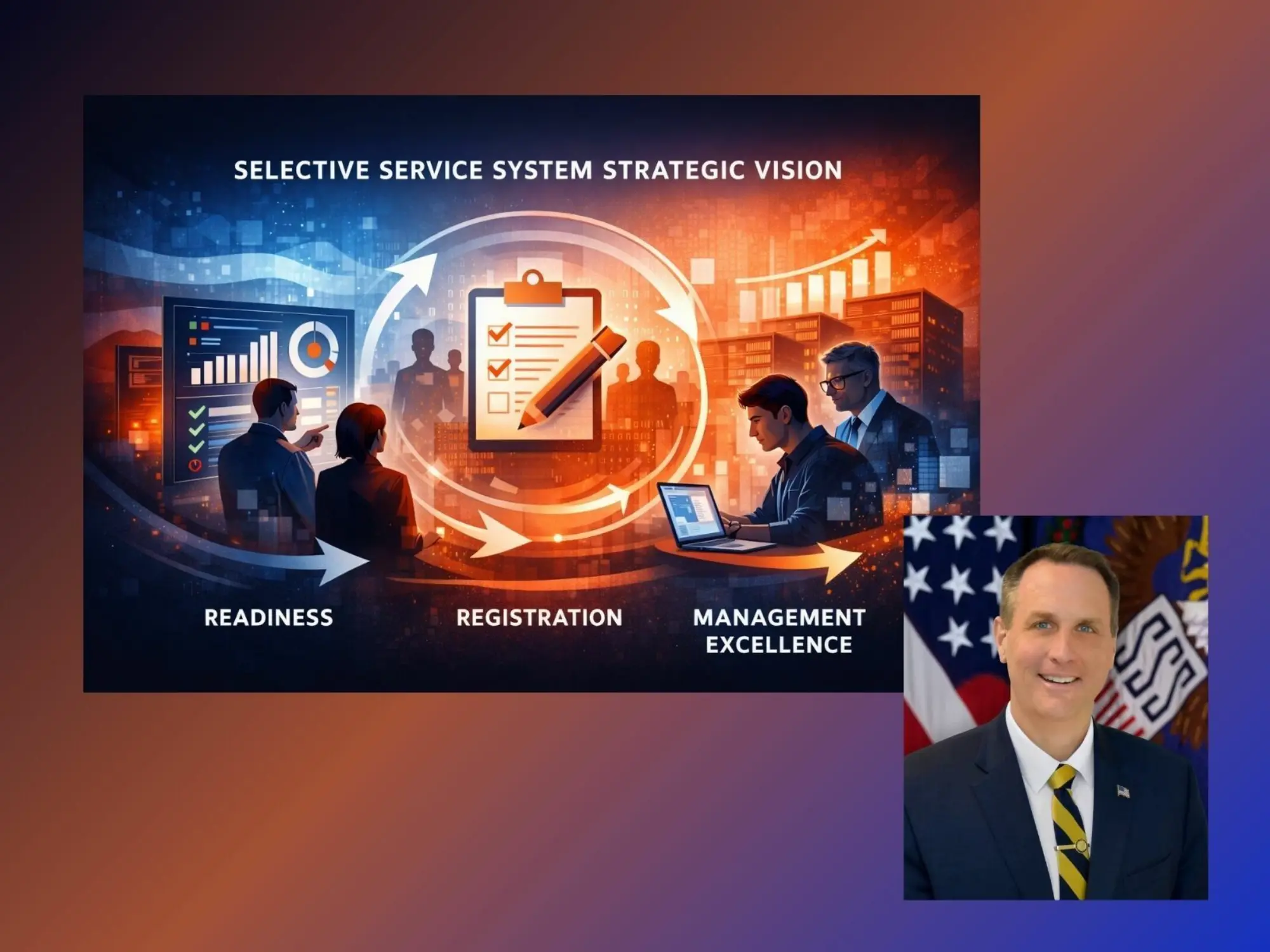
Agile government can unlock measurable value in federal agencies when implemented thoughtfully and with with the correct mindset. As the former Acting Director of the U.S. Selective Service System (SSS), an independent agency with a critical defense mission to register men and execute conscription when required, I found that agile principles improved readiness, performance, and public value. The SSS experience demonstrates that agile government is both practical and necessary for agencies operating in uncertain and high-stakes environments.¹
Agile Government is a Method and a Mindset
The National Academy of Public Administration defines agile government as an approach that “involves small teams and customer participation, empowered by leaders to take rapid action to deliver timely, transparent results.”² This aligns with author Stephen Denning’s description of agile organizations as customer-driven, team-based, and network-enabled enterprises.³ A growth mindset emphasizing customer connection, speed of delivery, and working across boundaries ultimately enables this. At SSS, agility was something we could claim and then activate as a small, independent agency with a significant mission and direct reporting relationships to the White House and Congress.
Strategic Context Demanded a New Vision
Upon my arrival in August 2022, it was apparent that SSS’s operating assumptions lagged behind the strategic environment. Since the end of the last military draft in 1973, the agency had largely existed in standby mode. However, the return of great power competition, particularly with China and Russia, reset top-level thinking. The 2022 National Security Strategy and congressional direction to conduct recurring Department of Defense (DoD) exercises using SSS authorities made clear that national mobilization could become essential in the future.⁴
This shift required a reorientation of purpose. We developed an SSS Strategic Vision built on three pillars: readiness, registration, and management excellence. Readiness, defined by us as the real capability to execute the full conscription mission, became the agency’s organizing priority. Registration of 18–25-year-old men with SSS remained a cornerstone requirement but could no longer serve as a proxy for evaluating overall mission capability. Management excellence ensured that enabling functions such as IT, finance, contracting, and human resources were kept at an “always audit ready” status and truly credible.
Agile Teams Enabled Measurable Readiness
By statute, the Selective Service System must be able to execute six mission essential functions (MEFs): registration, selection, notification, delivery, classification, and alternative service. Historically, the agency focused primarily on registration. To address this imbalance, SSS formed an integrated project team to develop readiness metrics across all six MEFs for the first time in the agency’s history.
Applying an explicitly agile approach, we emphasized iterative development and accepted early imperfection. Within four months, the team delivered a functioning set of MEF readiness metrics that became part of recurring senior leadership reviews. These metrics exposed gaps; guided planning and budget decisions; and created a shared, fact-based understanding of readiness across the agency.
Customer Focus Addressed a Registration Crisis
The Selective Service System also confronted a sharp decline in registration compliance following implementation of the Free Application for Federal Student Aid (FAFSA) Simplification Act of 2020. It had removed the SSS registration requirement for federal student aid and the option to register using the FAFSA. Approximately 20 percent of registrations had previously occurred through this method, and by 2022 compliance fell from about 90 percent to 84 percent.5
Embracing the agile law of the customer, SSS focused on reducing friction for young men while preserving legal compliance. A small, cross-functional team within the Selective Service System developed a legislative proposal to enable nationwide automatic registration using existing government data. After receiving bipartisan support beginning in 2023 and inclusion in versions of successive National Defense Authorization Acts, it finally passed into law in late 2025.6 The momentum and durable support the team created were essential to what has become the most significant transformation at SSS in over 45 years.
In parallel, SSS launched the “Top 10 to 73” outreach initiative, refocusing resources on underperforming regions and leveraging social media platforms widely used by young men. This resulted in a ten-fold increase in website traffic and helped stabilize registration compliance.
Networks Expanded Public Value
Agile government also enabled SSS to expand its impact through networks. Building on longstanding collaboration on military recruitment efforts with DoD, the agency pursued a “hub for service” model informed by the 2020 National Commission on Military, National, and Public Service.7 Working with DoD, AmeriCorps, Peace Corps, and the U.S. Office of Personnel Management, SSS established first-ever agreements to share service opportunities and launched a Service for America platform.
Conclusion
Agile government is a proven concept that has been demonstrated at SSS. When applied with discipline and leadership intent, it improves readiness, strengthens public trust, and enables innovation across organizational boundaries. In an era defined by uncertainty and strategic competition, agility is a core capability for public institutions and enables executives to adapt to change and succeed.
Notes:
¹ National Academy of Public Administration, Agile Government Center materials.
² National Academy of Public Administration, definition of agile government.
³ Stephen Denning, The Age of Agile (2018).
⁴ The White House, National Security Strategy (2022).
5 Selective Service System registration compliance data (2022).
6 National Defense Authorization Act amendments (FY 2024–FY 2026).
7 National Commission on Military, National, and Public Service, Final Report (2020).
Author
Article Details
Keep Reading
We use cookies to improve your experience on our site. By continuing to use this site, you accept our use of cookies. Privacy Policy