
PODCAST: Are We Living Through A Five-Alarm Fire for Public Servants? with Partnership For Public Service President & CEO Max Stier Season 3 · Ep 1
0:00
2062
PODCAST: Are We Living Through A Five-Alarm Fire for Public Servants? with Partnership For Public Service President & CEO Max Stier Season 3 · Ep 1
Event Details
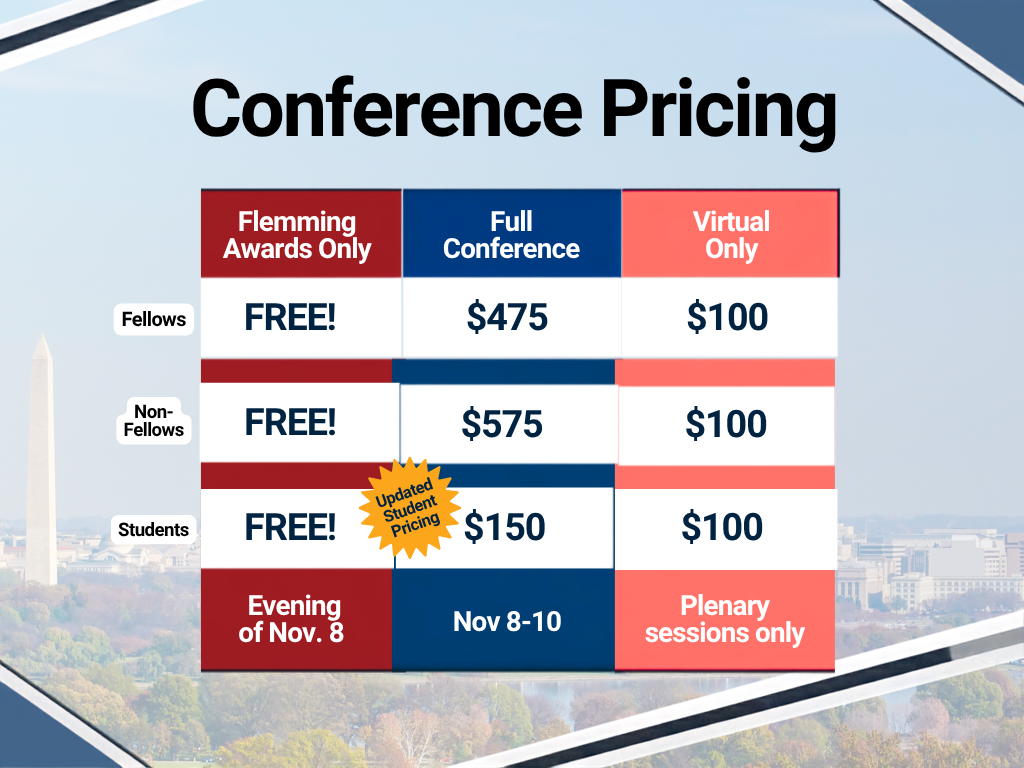
Save-the-Date! Join us for the annual National Conference at the National Academy of Sciences on November 8-10, 2026. Watch this space for more details.
Explore more
For accessibility needs or questions, please reach out to Academy staff at natcon@napawash.org.
6 photos — click any image to view full size
By taking part in the National Academy of Public Administration’s 2026 National Conference, all participants are required to:
The Academy is committed to a respectful and inclusive environment at every conference session, event, and related activity, whether in person or online. To support this commitment, participants are expected to:
If you experience or witness behavior that violates this Code of Conduct, if you feel unsafe, or if you need support, please notify any Academy staff member as soon as possible. Academy staff should promptly inform Diane Irving, the Senior Director of Administration, if they experience, witness, or receive a report of behavior that is inconsistent with this Code of Conduct. Reports will be handled promptly, with discretion, and with respect for the privacy of those involved.
Participants whose behavior is inconsistent with this Code may be asked to adjust it immediately, and the Academy may take corrective action at its discretion, including removal from the conference without refund and limits on future participation. Academy staff are held to the same standards and, if their behavior is inconsistent with this Code, may be asked to adjust it immediately and may be subject to action under the Academy employment policies.
9:00 a.m. - 1:00 p.m.
Richardson Leadership Lab
West Court
Speakers
Sesha Moon
Chief Diversity, Equity, and Inclusion Officer, Commonwealth of Virginia
Thad Allen
Chair, Space Based Positioning, Navigation, and Timing Advisory Board (NASA)
Melody Bell
Deputy Director, EMCBC, DOE
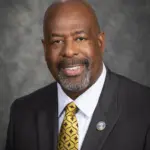
Byron Brooks
County Administrator, Orange County Government

Shannon Portillo
Director and Professor, Arizona State University
1:00 – 2:00 p.m.
Lunch
West Court, North Court
2:00 – 4:00 p.m.
Board Meeting
NAS 118
3:00 – 5:00 p.m.
New Fellows Orientation
NAS 120
5:00 pm
Welcome and Check in
Great Hall
5:30-6:30 p.m.
Flemming Awards Welcome Reception
Great Hall
6:30-7:30 p.m.
Flemming Awards
Kavli Auditorium
Speakers

Susan Swain
Former President and Co-CEO, C-SPAN

James-Christian Blockwood
President and CEO

Kathryn Newcomer
Professor, The George Washington University
7:30 - 8:00 pm
Post Awards Reception
Great Hall
8:30–9:00 a.m.
Breakfast
Great Hall
9:00–10:00 a.m.
Opening Plenary
Fireside Chat
Kavli Auditorium
Speakers
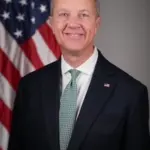
Eric Ueland
Deputy Director for Management at the Office of Management and Budget, Office of Management and Budget
James-Christian Blockwood
President and CEO
10:15–11:15 a.m.
Plenary Panel – Technology, Talent, and the Future of Government
Kavli Auditorium
Government's ability to harness artificial intelligence, modernize digital services, strengthen cybersecurity, and improve public service depends on one critical resource: people. As technology continues to transform how government operates, attracting, developing, and retaining world-class technical talent has become one of the defining challenges—and opportunities—of modern governance.
This conversation brings together leaders who are helping reshape how government recruits, develops, and empowers the technology workforce needed to meet today's challenges. Drawing on experience spanning government, the technology sector, and public service innovation, panelists will discuss how agencies can compete for top technical talent, build cultures that foster innovation, create meaningful career pathways, and prepare the next generation of public servants to lead in an increasingly digital world.
Speakers
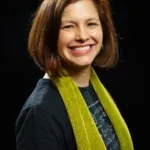
Jennifer Anastasoff
Executive Director, Tech Talent Project

Arun Gupta
CEO, NobleReach Foundation
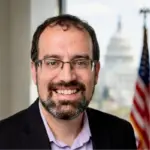
Aaron Lemon-Strauss
Chief Digital and AI Officer, Recoding America

Alexandra Reeves Givens
President & CEO, Center for Democracy & Technology
11:25–11:30 a.m.
Awarding of the Brownlow Book Award
Kavli Auditorium
Since 1968, the National Academy of Public Administration has recognized outstanding contributions to the literature of public administration through the presentation of the Louis Brownlow Book Award. The Award recognizes outstanding contributions on topics of wide contemporary interest to practitioners and scholars in the field of public administration. Generally, it is made to an author who provides new insights, fresh analysis, and original ideas that contribute to the understanding of the role of governmental institutions and how they can most effectively serve the public.
11:30 a.m.–12:15 p.m.
Paul Lawrence, Deputy Secretary of the Department of Veterans Affairs
Keynote Speaker
Kavli Auditorium
Speaker

Paul Lawrence
Deputy Secretary, Department of Veterans Affairs
12:15–1:10 p.m.
Lunch
West Court; NAS 120; Great Hall
Business meeting for the Africa Working Group - Board Room
1:15–1:20 p.m.
Awarding of the Roback Scholarship Awards
Kavli Auditorium
The late Herbert Roback was a highly respected public servant and a distinguished Fellow. During his 34-year career, he encouraged talented and promising students to consider lifetime careers in the public service. To honor Mr. Roback, his family and friends established the Herbert Roback Scholarship Fund to perpetuate his work.
To fulfill this goal, the Academy annually awards scholarships to graduate students currently enrolled, or admitted for enrollment, in full-time accredited master’s degree programs in public administration, public and international affairs, public policy, and/or political science.
Speakers

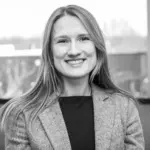
Madilyn Shirley
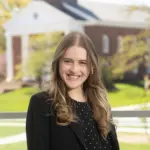
Diana Nalyvanna
Alice Nason
1:20–2:00 p.m.
Reimagining Federalism Panel
Kavli Auditorium
Speakers

Abby Davidson
Chief Research Officer, National Association of Counties

Julia Novak
CEO/Executive Director, International City/County Management Association

Kyle Wedberg
Senior Manager, GFOA
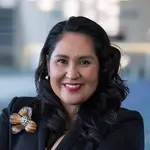
Irma Esparza Diggs
Senior Executive and Director, Federal Advocacy, National League of Cities

Shelby Kerns
Executive Director, National Association of State Budget Officers

Kurt Thurmaier
Presidential Engagement Professor and Director, Northern Illinois University
2:15-3:15 p.m.
Concurrent Session 1: Real-World Lessons in Emergency Preparedness and Resilience with IBM
NAS Members Room
This session will focus on using the recently published Future Shocks research and the Flood View case to spark a practical conversation about how governments can use AI and emerging technologies to spot risks earlier, improve coordination, strengthen emergency preparedness, and adapt proven lessons across jurisdictions and operating environments.
Core takeaway for participants:
Governments do not strengthen preparedness through better information alone. Impact comes from translating earlier insight into coordinated action through trusted partnerships, operational integration, and solutions designed around the people responsible for making critical decisions.
Speakers
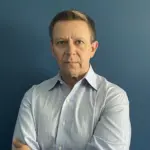
Dave Zaharchuk
Research Director, IBM

Margaret Graves
Chair, American Council for Technology and Industry Advisory Council (ACT-IAC)

Michael Jacobs
Head of Social Innovation, IBM
Soyoung Sohn
PhD Student, UIUC Water Resources Engineering and Science
2:15-3:15 p.m.
Concurrent Session 1: How Can Legislative Oversight Help Deliver Better Public Policy Outcomes?
118
Legislative oversight is the process by which Congress and state legislatures tackle problems by digging into the facts to educate themselves and inform the public. Given widespread frustration with government, can legislative oversight help to improve public policy outcomes and restore the public’s faith in our democratic institutions? Doing so will require lawmakers to pay more attention to the public’s lived experience with government programs and the challenges public administrators face in executing the policies approved by the legislative branch.
The Levin Center for Oversight and Democracy works with lawmakers in Congress and in state legislatures across the country to improve the practice of legislative fact-finding. This interactive presentation will discuss how lawmakers use their oversight powers and explore current examples of oversight related to the regulation of artificial intelligence and its societal impacts.
Attendees will leave this session with an understanding and appreciation of legislative oversight, how it occurs in Congress and in state legislatures, and how legislators using this authority can positively impact public administration.
Speaker
Jim Townsend
Director of the Carl Levin Center for Oversight and Democracy, Levin Center
2:15-3:15 p.m.
Concurrent Session 1: Introduction to the AI Ready Government Workforce Initiative
Joint Technology Leadership and Public Service Standing Panel
NAS 120
This Joint Technology Leadership and Public Service Standing Panel will serve as an introduction to the Panels' work on developing AI readiness for the government workforce, particularly senior public leaders. The initiative is focused on helping leaders understand AI, build the capabilities needed to use it effectively, and lead responsible adoption within their organizations.
The two panels present complementary perspectives: technology and emerging applications on one side, and leadership, workforce, governance, ethics, and public service considerations on the other. Their goal is to develop something practical and distinctive rather than duplicate the many AI efforts already underway.
The Standing Panel Chairs will explain the initiative, share what they are learning from the initial landscape review and stakeholder outreach, and invite additional Fellows to help shape the work going forward.
Speakers

Kimberly Walton
CEO, SynergyUSA

Alan Shark
Senior Fellow, Center for Digital Government

Theresa Pardo
Associate Vice President for Research, State University of New York at Albany

Daniel Chenok
Executive Director, IBM Center for The Business of Government
2:15-3:15 p.m.
Concurrent Session 1: Discussion of the NAPA Working Group Report "Beyond Programs and Agencies: Transforming Governance Institutions to Improve Societal Outcomes"
NAS 125
The speakers will discuss the Transforming Public Governance Institutions Working Group's report, "Beyond Programs and Agencies: Transforming Governance Institutions to Improve Societal Outcomes."
This report draws on seven cases of the transformation of governance institutions to improve societal outcomes. Building on research from public administration, institutional economics, political science, public finance, and governance studies in examining successful transformation initiatives, it identifies practical strategies for creating institutions capable of producing measurable improvements in societal outcomes.
Transformation of governance institutions is the central challenge of twenty-first-century societies, and the report seeks to deepen the understanding needed to pursue that goal with purpose.
Speakers

Mark Pisano
Academy Fellow, National Academy of Public Administration

Richard Callahan
Consultant, University of San Francisco, School of Management

Amanda Mullan
Cooley-Fanning Director for Strategic Initiatives, National Academy of Public Administration

Louis Uccellini
Former Director, National Weather Service
3:30 - 4:30 p.m.
Concurrent Session 2: Building, Modernizing, and Empowering Through Academy Engagement
Member's Room
Learn more about the impactful work the Academy staff has been doing, including recently completed projects with local and federal agencies and partner organizations. Academy staff will share highlights of congressionally directed study work, stakeholder engagement at the city level, and exploration of state human resource practices. Brenna Isman, Senior Director of Research and Government Solutions, will provide insights and themes of the programs driving a successful FY 2026 and the continuation into 2027.
Speakers

Brenna Isman
Senior Director of Research and Government Solutions, National Academy of Public Administration

Kate Connor
Senior Manager, Research and Government Solutions, National Academy of Public Administration

Nancy Augustine
Macomber-Weil Director, Center for Intergovernmental Partnerships and Project Director
3:30- 4:30 p.m.
Concurrent Session 2: Building Election Infrastructure presented by the Brennan Center
NAS 125
Election administration is a crucial pillar of our democracy and has become increasingly complex over the past decade. To administer safe, secure, transparent, and trustworthy elections in today’s environment, election officials are increasingly relying on an expanding network of intragovernmental partnerships with legal counsel, law enforcement, and other agencies. This panel will explore the role of these expanding partnerships, their impact on resource allocation, and feature three leaders with deep experience in election administration and public safety. Gary Restaino, former U.S. Attorney for Arizona, Thomas Hicks, former Commissioner of the U.S. Election Assistance Commission; and Chief Michel Moore (ret.) - 57th Chief of Police of the Los Angeles Police Department and Co-Chair of CSSE. They will share perspectives from federal and law enforcement experience on what the 2026 midterms revealed about the value of strong collaboration, and draw on how good relationships between election officials and the offices that support them can improve preparedness and manage risk to support transparent and trustworthy elections.
Speakers

Thomas Hicks
Former Commissioner, U.S. Election Assistance Commission
Michel Moore
Retired 57th Chief of Police, Los Angeles Police Department, Co-Chair, CSSE
Gary Restaino
Former U.S. Attorney, Arizona
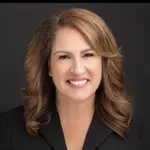
Tina Barton
Co-Chair, Committee for Safe and Secure Elections (CSSE)
3:30- 4:30 p.m.
Concurrent Session 2: From Plans to Action: Why Resilience Is a Public Administration Challenge
NAS 120
Floods, extreme heat, wildfires, and severe storms already shape daily life, from whether roads stay open to whether homes remain safe and insurable. Many communities know what they need to do to prepare, but they often lack the legal authority, financing tools, and institutional structures to turn plans into action. That makes resilience a public administration challenge as much as an environmental or engineering one.
This panel offers an accessible introduction for those new to resilience. Panelists will explore what resilience looks like in everyday life and why its benefits can be hard to see. They will also discuss why so many good plans stall, often because of how our institutions are designed rather than a lack of money or expertise.
Attendees will leave understanding where projects break down between planning and implementation, and how governance and financing structures can sustain them over the long term. They will also learn practical ways to communicate resilience to residents and decision makers and to build lasting public and political support.
Speakers
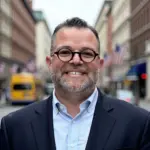
Eric M. Leckey
Managing Director, Business and Government Relations, Ceres Enviromental Services

Heidi Roop
Director & Associate Professor, University of Minnesota Climate Adaptation Partnership

Dan Nees
President, Dan Nees and Associates
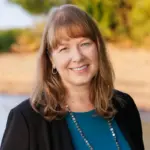
Jen Molnar
Lead, East Coast Resilience and Nature-based Solutions Practice, AECOM
3:30- 4:30 p.m.
Concurrent Session 2: Equity Implications of Executive Orders
118
The Social Equity Standing Panel will present an update on its research regarding the equity implications of executive actions issued between January 2025 and May 2026. The session will comprise a presentation of the Panel's Executive Order research by Shannon Portillo (ASU) and Yali Pang, Senior Research Associate, Research Institute for Social Equity at VCU. After the presentation, Shannon and Yali will be joined by Danny Werfel, the former IRS Commissioner, to discuss the EOs' implications at the federal and local levels.
Speakers
Shannon Portillo
Director and Professor, Arizona State University

Mark Funkhouser
Publisher and Founding Director, Governing Magazine and Governing Institute

Danny Werfel
Senior Fellow, The John Hopkins University
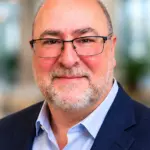
Michael Jacobson
Owner, Jacobson Consulting LLC
4:30 – 5:00 p.m.
Break
Great Hall
5:00-5:30 p.m.
New Fellows Induction Ceremony
Kavli Auditorium
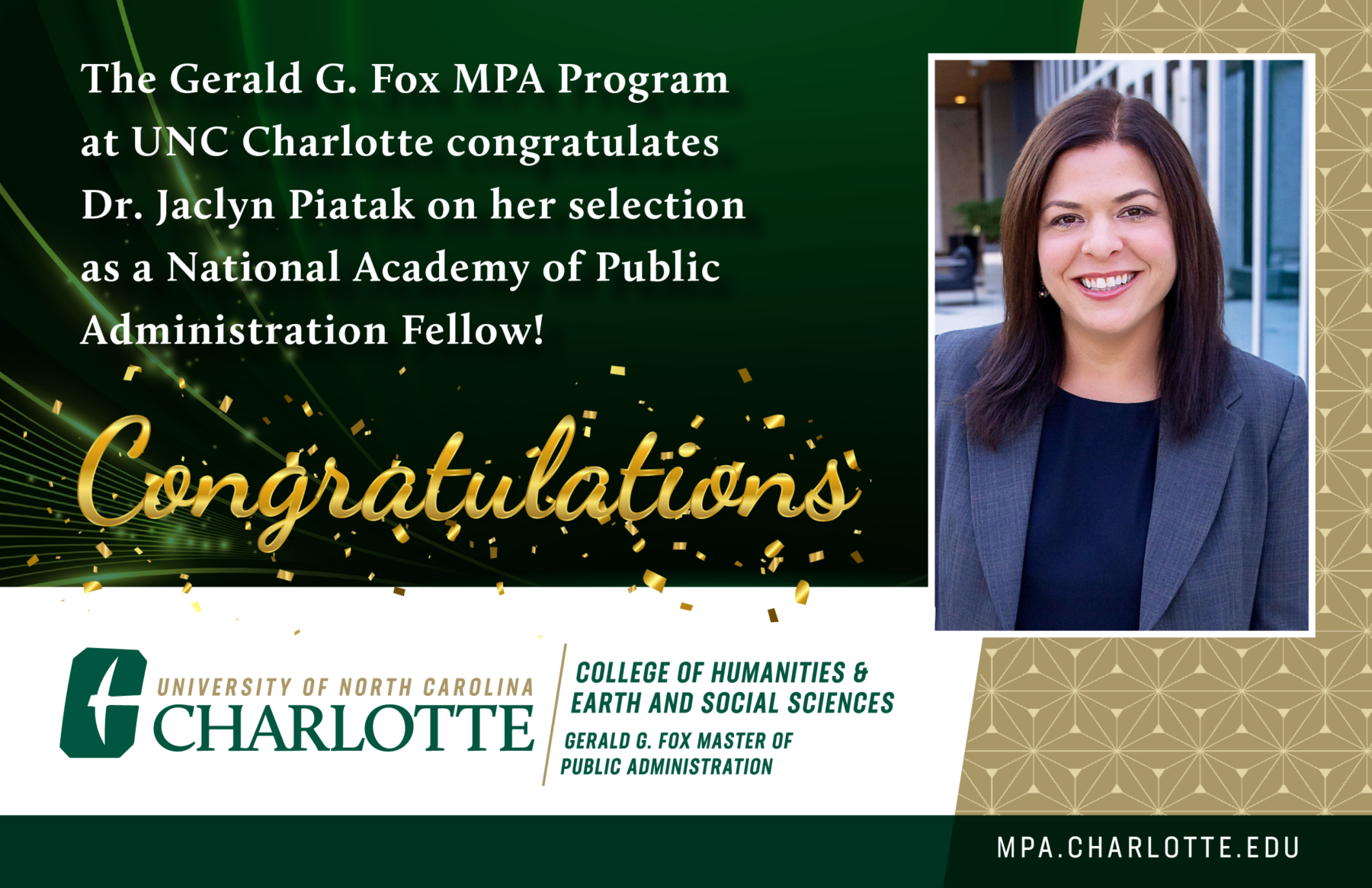
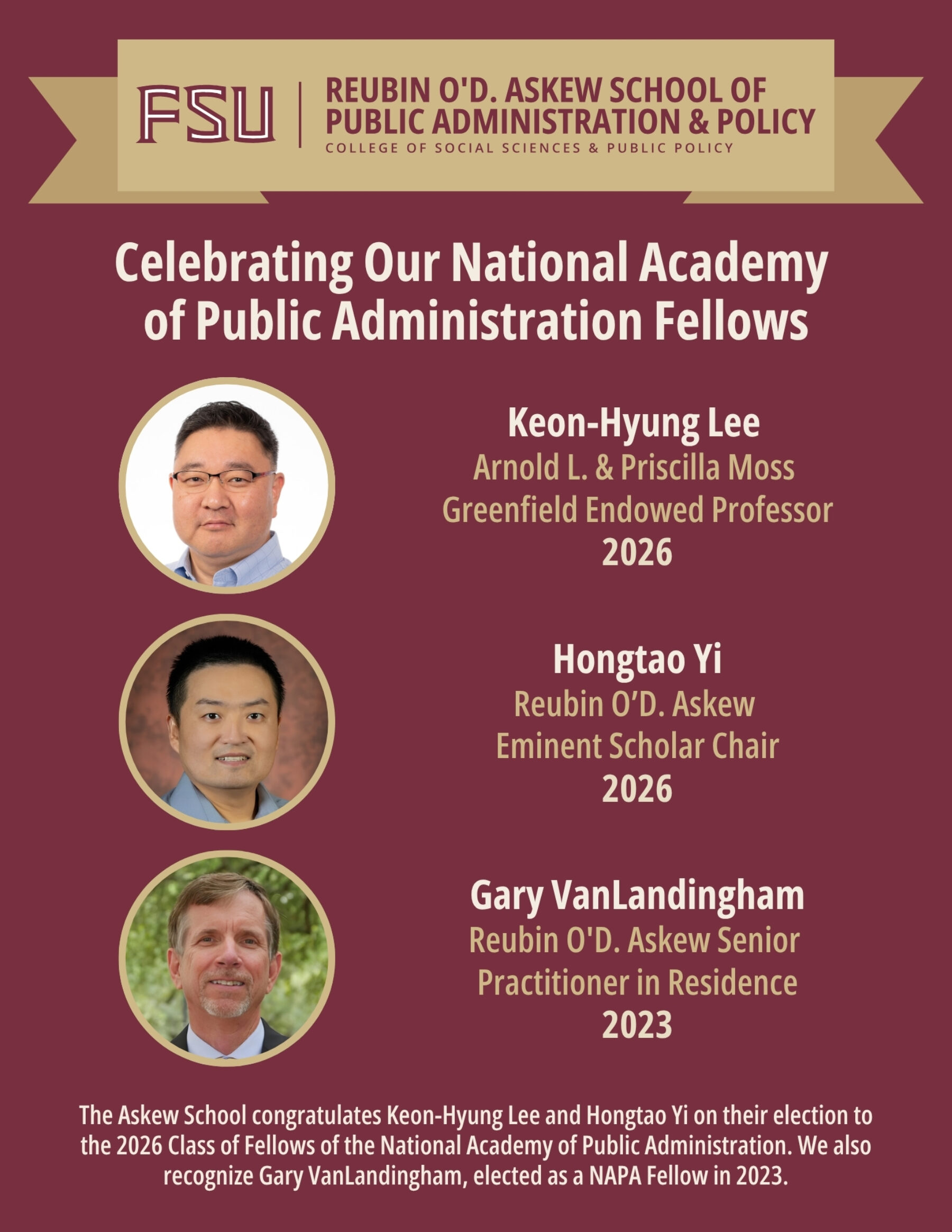
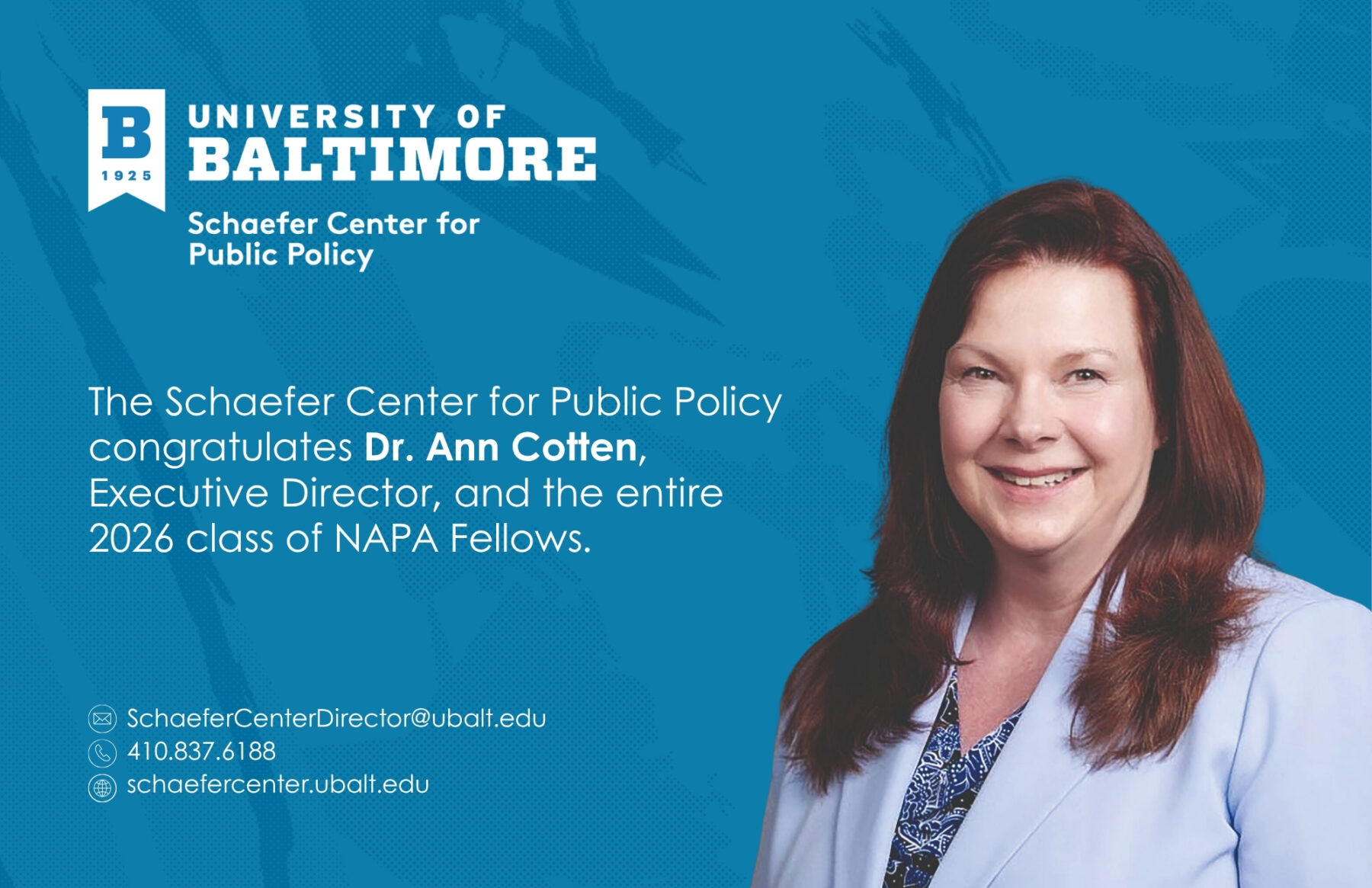
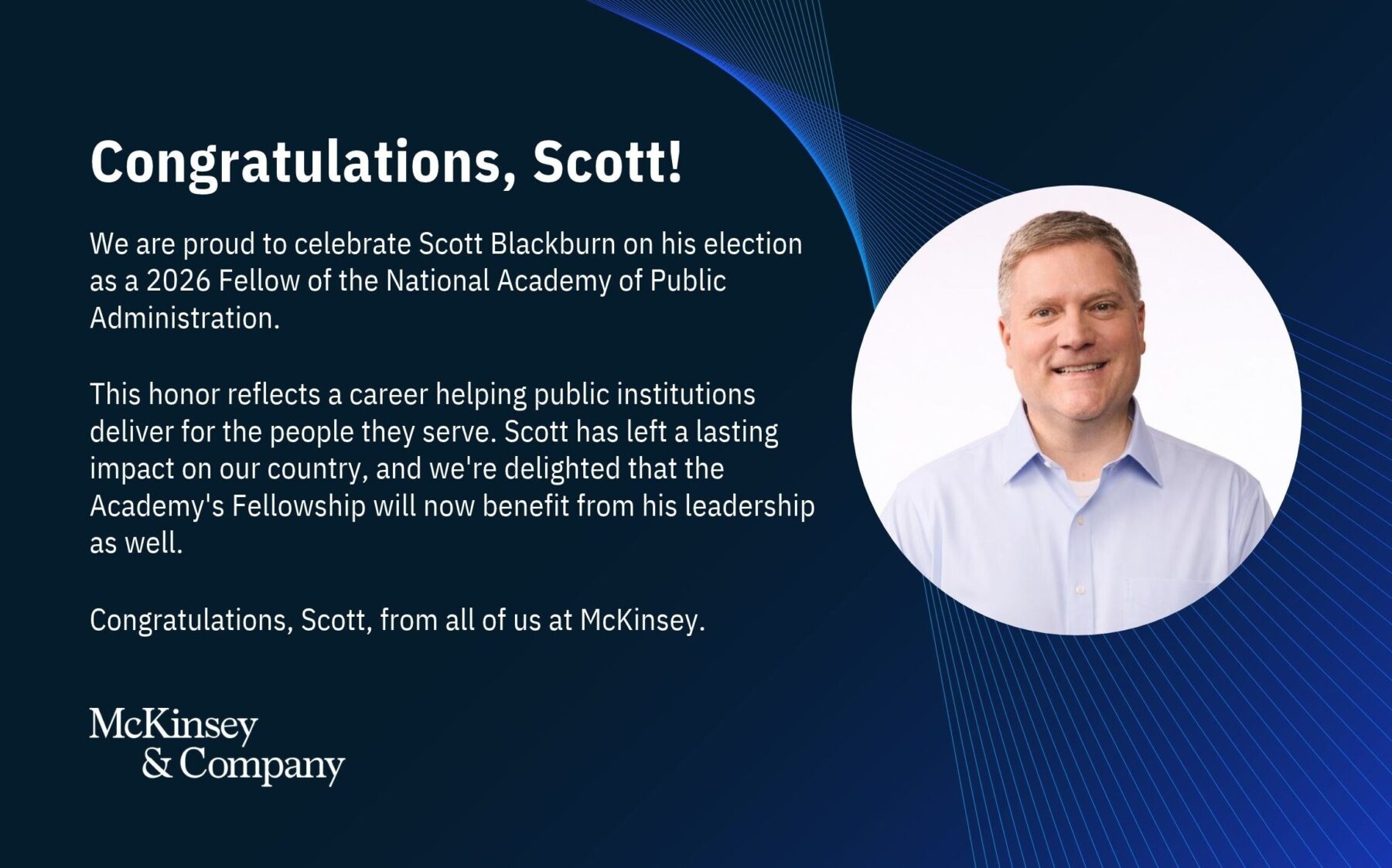
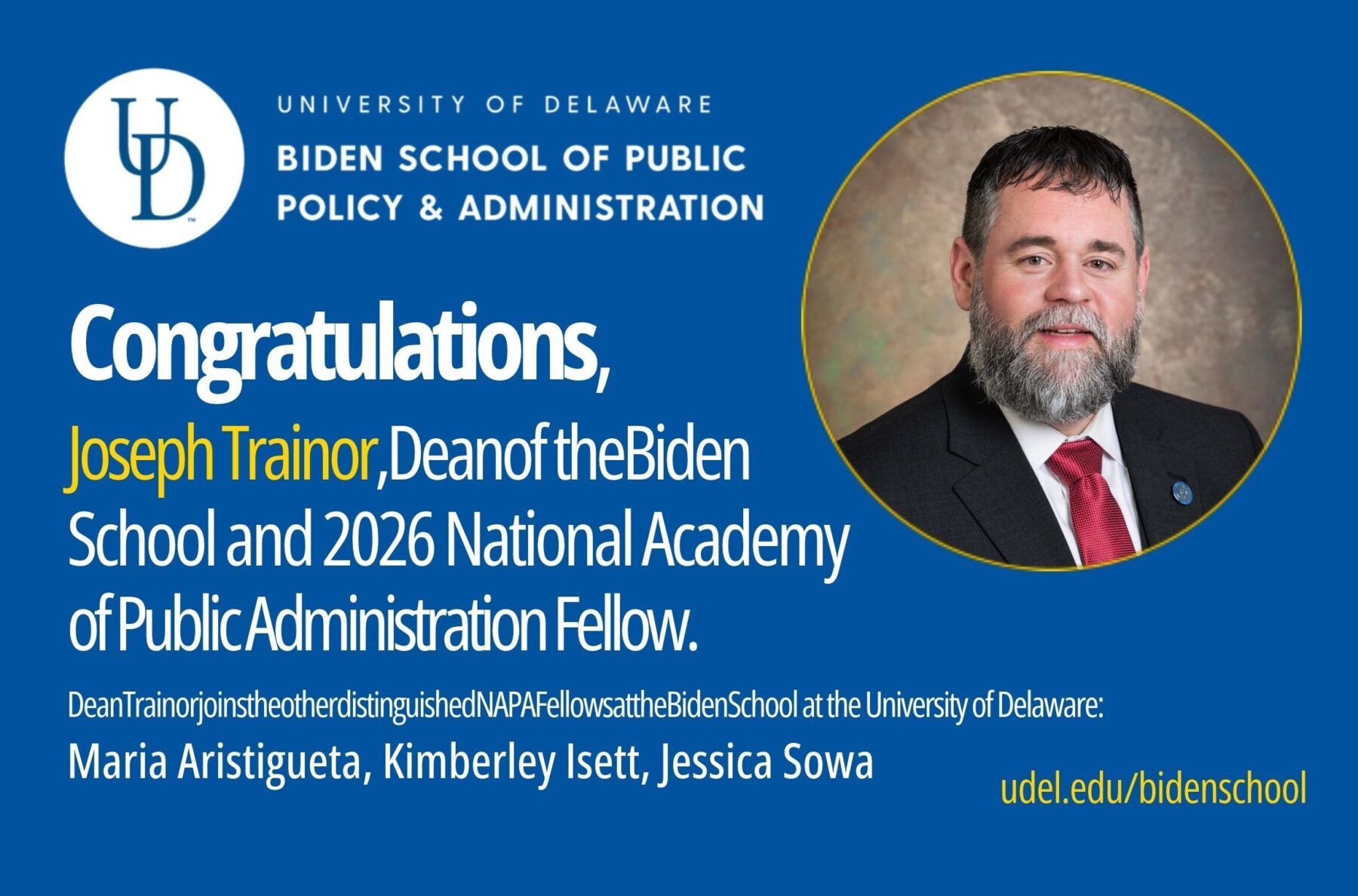
On Friday, Sept. 25, the Academy Board approved an incoming class of 64 highly accomplished public servants to join the National Academy of Public Administration Fellowship. The incoming class of Fellows includes AI pioneers, statisticians, historians, educators, and public service practitioners from the local, state, and federal levels.
The 2026 Class joins more than 1,000 current Fellows, including former cabinet officers, members of Congress, governors, mayors, and state legislators, as well as prominent scholars, executives, nonprofit leaders, and more.
Selection of new Fellows follows a rigorous review of the individual’s contributions to the fields of public administration and policy. A Nominating Committee, selected by the Academy’s Board Chair, reviews hundreds of applicants and makes its recommendations to the full Fellowship, which then votes on each nominee. The 2026 Nominating Committee was co-chaired by Fellows Kerry Neal and Jeanette Takamura.
5:30-7:00 p.m.
New Fellows Reception
Great Hall
Enjoy drinks and hor d'eurves with family and friends, and commemorate this joyous occasion with our photo booth!
8:00 - 9:00 a.m.
Breakfast
Great Hall
8:30-8:45 a.m.
Special Welcome from IBM: Building Decision Readiness for Future Shocks
Kavli Auditorium
Speaker

Cristina Caballe Fuguet
Vice President, Global Public Sector, IBM
8:30 – 9:30 a.m.
Plenary - Fellows Forum
Kavli Auditorium
For our non-Fellow attendees, we will be offering an extended breakfast and an opportunity to take an updated headshot
8:30 - 9:30 a.m.
Networking and Headshot Opportunity
For Non-Fellow Attendees
Great Hall
While Fellow convene for the Fellows Forum, all other attendees are invited to connect before the morning's plenary sessions. Our photographer will be offering free headshots during this period.
9:45 - 10:30 a.m.
Plenary – U.S. Senator Tim Kaine
Kavli Auditorium
Speakers
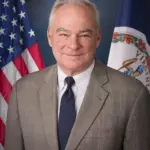
Tim Kaine
U.S. Senator for the State of Virginia, State of Virginia

Stan Soloway
President & CEO, Celero Strategies, LLC
10:45 – 11:30 a.m.
Plenary Panel - Past, Present, Future of Federal Workforce Panel
Kavli Auditorium
For decades, leaders across government, academia, and the nonprofit sector have worked to make public institutions more effective, responsive, and capable of delivering results. Today, that conversation has gained new momentum as leaders rethink how government recruits talent, modernizes operations, strengthens state capacity, and improves implementation.
This session brings together leaders who have shaped the government reform movement, those advancing reforms from within government today, and those developing the ideas that will influence what's next. Together, they will explore where there is growing consensus across perspectives, what reforms have the greatest potential to improve government performance, and what it will take to build a government that is outcome-oriented, people-centered, and focused on delivering results.
Speakers
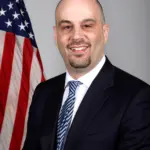
Noah Peters
Senior Advisor for Policy and Legal Affairs and Counsel, OPM

Kevin Hawickhorst
Research Fellow, Foundation for American Innovation
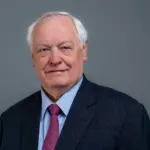
George Nesterczuk
Former Senior Advisor, Deputy Secretary of State for Management and Resources
James-Christian Blockwood
President and CEO
11:30-12:30 p.m.
Lunch
East and West Court
Business meeting for Social Equity Standing Panel, NAS 118
Business meeting for the Intergovernmental Standing Panel, NAS 120
Business meeting for the Tech Leadership Standing Panel, Members Room
Business meeting for the Public Service Standing Panel, Lecture Room
Richardson Student Lunch, Room 125
12:30-1:30 p.m.
Concurrent Session 3: Risks on the Horizon: Toward an All-Hazards Approach?
The Lecture Room
Emergency managers have long taken an “all-hazards” approach to disasters, building plans and capabilities that work whether the threat is a flood, a fire, or a chemical spill. Today the risks facing government reach well beyond natural disasters, to a changing climate, strained insurance markets, the rapid evolution of AI, cyberattacks, and the public finances themselves. Rising debt is a risk in its own right, and it also limits how well governments can absorb every other shock. Some of these risks are old. Some are new. All are changing. Can the all-hazards idea stretch to cover them? Doing so will require policymakers and administrators to look past the separate agencies, budgets, and experts that usually handle each risk on its own.
Moderated by Eli Lehrer of the R Street Institute, this panel brings together experts on fiscal policy, government programs, insurance, AI, and natural hazards. Each will start by laying out the risks in their own field: what’s changing, what worries them most, and what others tend to miss. From there, they’ll look for places where preparing for one risk helps with others, and places where it makes others worse. The point isn’t to reach consensus in an hour.
Attendees will leave with a clearer picture of the risks ahead, a better sense of how they connect, and a hard question to take back to their own work: when money is tight, should governments prepare for the risks they can predict, or build resilience against the ones they can’t?
Speakers

Eli Lehrer
CEO, R Street
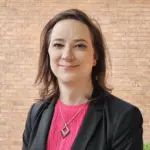
Jessica Riedl
Budget and Tax Fellow, Brookings Institution
Daniel Kaniewski
Founder and CEO, Northstar Risk & Resilience
Thomas Stanton
Former Director, Tax Reform Research Group

Ed Tarnowski
Resident Fellow, Technology and Innovation, R Street
12:30-1:30 p.m.
Concurrent Session 3: Why Nothing Works Book Conversation with author Marc Dunkelman
NAS 125
America was once a country that did big things—we built the world’s greatest rail network, a vast electrical grid, interstate highways, abundant housing, the Social Security system, the Tennessee Valley Authority, and more. But today, even while facing a host of pressing challenges—a housing shortage, a climate crisis, a dilapidated infrastructure—we feel stuck, unable to move the needle. Why?
Marc J. Dunkelman will lead a discussion around his book, “Why Nothing Works," which addresses this very question. The conversation will delve into different approaches to governance and offer potential solutions to government gridlock.
Speaker

Marc Dunkelman
Research Fellow, Brown University’s A. Alfred Taubman Center for Public Policy and American Institutions
12:30-1:30 p.m.
Concurrent Session 3: International Affairs Standing Panel: Updates and Accomplishments
NAS Members Room
The panel will focus on next steps in its efforts to learn from comparing (cross country) governance approaches to 2026 common local challenges.
Following up on the successful October Hong Kong workshop on climate impact risk science and its local use (co-sponsored with the UC Berkeley based California/China Climate Institute, Monash U and Chinese U of Hong Kong) and looking towards a 2027 Monash (Melbourne) workshop, next steps to be discussed include engaging Africa, working with a UN/WMO cosponsored global AI and sustainability network, developing a primer for local decision makers who must use risk projections, an invitation to do special journal issue(s), gaining UN report recognition for NAPA climate reports, and more.
Further projects to be discussed include a webinar series where social/policy entrepreneurs whose work has had a global impact will talk about lessons learned to address today’s challenges.
Speakers

Daniel Guttman
Counsel and Adjunct Professor, Guttman and Buschner, New York University US Asia Law Institute, Fudan University/London School of Economics Institute for Global Public Policy
Mark Pisano
Academy Fellow, National Academy of Public Administration

Willene A. Johnson
Former President, Komaza Inc.

Irving Williamson
Former Commissioner, U.S. International Trade Commission
12:30-1:30 p.m.
Concurrent Session 3: The Future of Agile Government
NAS 120
Government is being asked to move faster, adapt sooner, and deliver better results for the users and public it serves, all while the ground keeps shifting beneath it. What comes next? Leaders of the Academy's Agile Government Center will offer a forward-looking conversation on where Agile government is headed and what it will take to get there. The answer starts with people: building a generation of public servants equipped to lead change, work iteratively, and keep the public at the center of every decision. Speakers will share how the Center's learning program is helping agencies grow that capacity from within, and why investing in agile leaders is essential to lasting government transformation. Attendees at every stage of the agile journey will leave with a fresh perspective, practical insight, and a clearer picture of what's possible.
Speakers

G. Edward DeSeve
Academy Fellow and Coordinator of the Agile Government Center at the National Academy of Public Administration, National Academy of Public Administration
Amanda Mullan
Cooley-Fanning Director for Strategic Initiatives, National Academy of Public Administration
1:45–2:35 p.m
Plenary - AI and the Future of Government
Kavli Auditorium
Speakers
Thiyagu Ramasamy
Head of AMER Public Sector, Anthropic
Chris Niehaus
Director, Federal Civilian & Federal Business Development, Google Public Sector
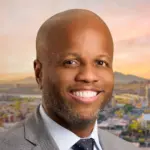
Corey Woods
Mayor, Tempe, Arizona

Alexis Bonnell
Partnership Manager, OpenAI
2:40-2:45 p.m.
Awarding of the George Graham Award for Exceptional Service to the Academy
Kavli Auditorium
2:45-3:00 p.m.
Closing Plenary - Admiral Linda Fagan
Kavli Auditorium
Speaker
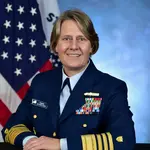
Linda Fagan
Former Commandant of the Coast Guard
We use cookies to improve your experience on our site. By continuing to use this site, you accept our use of cookies. Privacy Policy